
Verified
What is the Book of Enoch?
1 Enoch is an ancient Jewish apocalyptic work composed of several major sections that developed in antiquity. It was not created by modern conspiracy culture.
View Evidence File →Enoch
Daniel Mercer
Prototype Narration
Listen to the opening of Daniel Mercer's investigation, or continue below to read the chapter and explore its Evidence Files.
Loading audio
This is prototype narration created for the early-reader experience. The upcoming Kickstarter will help fund professional human narration for the completed audiobook.
Prefer to read? Continue to Chapter One ↓CHAPTER ONE
Daniel Mercer had a rule about rabbit holes. Never enter one after midnight. It was a rule he had developed over twenty years as a journalist, sometime between discovering that every political scandal eventually led to a message board and realizing that three hours on the internet could make almost anything seem plausible.
At 1:47 in the morning, he broke his rule. The house was quiet. His laptop was open on the kitchen table, beside a half-finished glass of Scotch and a yellow legal pad covered in handwriting that had become progressively less legible as the night went on.
At the top of the page, he had written:
WHY DO SMART PEOPLE BELIEVE STRANGE THINGS?
Underneath it were six words. UFOs, Pyramids, Atlantis, Giants, Flood, Enoch. The last one had been circled twice.
Daniel leaned back and rubbed his eyes. This wasn't supposed to be a story about the Book of Enoch. It wasn't supposed to be a story at all.
Three weeks earlier, his editor had asked him to write fifteen hundred words about conspiracy culture. Not the conspiracies themselves. There were already thousands of articles about those. She wanted something different. Why did otherwise rational people get pulled into them? What made someone watch one documentary about unidentified objects over the Pacific and, six months later, find themselves comparing Egyptian hieroglyphs with photographs from Mars?
Daniel liked the question because he thought he knew the answer. The internet. Loneliness. Confirmation bias. Distrust of institutions. Algorithms that learned exactly how to turn curiosity into obsession. It was tidy. Psychological. Modern.
Then he started interviewing people. That was where things became less tidy. A software engineer in Seattle had sent him a forty-three-page document about the construction of the Great Pyramid. A retired teacher in Ohio had spent two hours explaining similarities between flood traditions. An accountant in Manchester had given him a list of archaeological sites Daniel had never heard of.
None of them sounded crazy. That bothered him more than if they had. They had jobs. Families. Mortgages. One apologized for having to end their interview because he needed to pick up his daughter from soccer practice. And almost every conversation followed the same pattern.
Daniel would ask what started it. There would be a pause. Then a sentence like: "I saw something I couldn't explain." Or: "I just wanted to check one thing."
One thing became another. Then another. Until eventually they reached something Daniel had begun privately calling the door. The moment where curiosity stopped being casual. Where the person realized there was enough truth mixed into the nonsense that dismissing all of it became harder than believing some of it.
Daniel had spent most of his career on the other side of that door. Facts were facts. Claims were claims. Evidence either existed or it didn't. He was comfortable there.
Tonight, he had been researching giants. That sentence alone made him reach for the Scotch. It had started with an interview earlier that afternoon. A forty-six-year-old aerospace engineer named Thomas Reed had mentioned the Nephilim. Daniel hadn't known what the word meant.
“Giants,” Reed had said.
“Biblical giants?” Daniel had asked.
“Sort of.”
Daniel remembered smiling. Reed had noticed.
“Don’t believe me,” he’d said. “Look it up.”
So, Daniel did. Genesis 6. Four verses. He read them once. Then again. The sons of God. The daughters of men. The Nephilim. It was strange, but ancient religious texts were full of strange things. Daniel made a note and nearly moved on.
Then he found Enoch. At first, Daniel assumed it was another biblical book he'd somehow forgotten. He typed the name into Google. Book of Enoch. The first few results were predictable. Wikipedia. Bible sites. YouTube thumbnails featuring winged creatures, enormous skeletons and men with expressions of manufactured terror.
THE BOOK THEY REMOVED FROM THE BIBLE
WHY THEY DON'T WANT YOU TO READ ENOCH
THE TRUTH ABOUT THE NEPHILIM
Daniel sighed. There it was. The internet doing what the internet did. He clicked Wikipedia. Ten minutes later, he was no longer smiling.
The Book of Enoch wasn't some modern fabrication. It was an ancient Jewish religious work. Parts of it predated Christianity. Fragments had been discovered among the Dead Sea Scrolls. Daniel stopped. He reread that sentence. Then opened another tab. Dead Sea Scrolls. Qumran. Aramaic fragments. Multiple copies. He checked another source. Then another. The basic facts held. Whatever else could be said about the Book of Enoch, somebody hadn't invented it on a message board in 1997.
Daniel returned to the text. The opening sections described beings called Watchers. He read the word twice. According to the story, two hundred of them descended to Earth. They took human wives. Their children became giants. The Nephilim. Daniel sat back.
"Okay." The word sounded unusually loud in the empty kitchen. He kept reading. The giants weren't the part that caught his attention. It was what came next.
The Watchers taught people things. Daniel moved closer to the screen. One taught men how to make swords, knives and armor. Another taught the working of metals. Others taught astronomy. The movements of the moon. Signs of the earth. The course of the stars. One taught enchantments. Another taught the use of plants. Daniel read the list again. Then a third time.
The story wasn't simply about supernatural beings mating with humans. It was about knowledge. Knowledge given to people who apparently weren't supposed to have it.
Daniel reached for the legal pad. Under Enoch, he wrote: FORBIDDEN KNOWLEDGE
He stared at the words. Something about them bothered him. Not because he believed the story. He didn't. Ancient people created myths to explain the world. Gods brought fire. Gods taught agriculture. Gods created writing. Gods explained thunder and eclipses and death. Humanity had been telling variations of those stories for thousands of years. There was nothing unusual about that.
What bothered him was Thomas Reed. Daniel opened the recording of their interview. He dragged the cursor toward the final twenty minutes. Reed's voice filled the kitchen.
"You keep asking why people believe this stuff. That's the wrong question."
Daniel had almost forgotten the comment. His own voice followed. "What's the right question?"
"Why do the same stories keep showing up?"
Daniel paused the recording. He remembered what he'd said next. "Because people copy stories." Reed had laughed. Not mockingly. Almost approvingly. "Good. That's an explanation. Now prove it." Daniel resumed the recording.
"You have flood stories all over the ancient world. Beings coming down from the sky. Giants. Teachers bringing knowledge. Civilizations destroyed. You don't have to believe any of it. I don't know what I believe. But eventually you have to ask why people separated by thousands of miles kept telling stories that sound like variations of the same thing."
Daniel stopped the recording again. At the time, he'd filed the statement under the broad category of things that sounded impressive until examined carefully. Stories traveled. Cultures interacted. Human beings shared fears and experiences. Floods happened. The sky was mysterious. Large men existed. Knowledge had to come from somewhere. There were perfectly ordinary explanations. But that wasn't what bothered him now.
He looked at the legal pad. UFOs. Pyramids. Atlantis. Giants. Flood. Enoch. They weren't random. He'd written them down over the course of three weeks because they were the subjects that appeared most often in his interviews.
Daniel drew a line from Giants to Enoch. That much was obvious. Then another from Enoch to Flood. The Watchers. The Nephilim. Corruption. Judgment. Noah.
He opened a new browser tab. His search was simple:
Book of Enoch flood
Hundreds of results. Daniel ignored the videos and opened translations instead. He read. Then searched again:
Enoch astronomy
More results. The Astronomical Book. Movements of heavenly bodies. Calendars. Solar cycles. Lunar cycles. He looked down at his list.
UFOs. No. He wasn't doing that. Daniel took a drink. The ice had almost completely melted. He searched anyway:
Book of Enoch ancient aliens
The screen filled with nonsense. Daniel felt strangely relieved. YouTube. Blogs. UFO sites. AI-generated articles recycling one another. Claims without sources. Pictures of statues that had nothing to do with Enoch. A video promising proof that extraterrestrials had genetically engineered humanity. This was familiar territory. This was the article he had expected to write. Take an obscure ancient text. Strip away context. Translate angels into extraterrestrials. Add pyramids. Add government secrecy. Put a red circle around something in a grainy photograph. Done.
Daniel closed the tab. Then reopened it. Not the search results. Enoch. He wanted to know what the text actually said. He found a translation and began at the beginning. He read slowly now. Not because he believed it.
Because he didn't want someone else's interpretation. The Watchers saw the daughters of men. They descended. They bound themselves together. They taught. Their children became giants. Violence spread across the earth. Then came judgment. Then came the Flood. Daniel turned a page on the legal pad.
He wrote:
CLAIM: ENOCH DESCRIBES ALIENS
Underneath:
EVIDENCE: NONE
He paused. Then added:
ACTUAL CLAIM: SUPERNATURAL BEINGS DESCEND FROM SKY
He stared at it. Technically true. That was the problem with rabbit holes. The first step was rarely a lie.
It was usually a fact stripped of everything that made it ordinary. Daniel had seen the technique a hundred times. Start with something verifiable. The government really did conduct secret experiments. Intelligence agencies really had lied. Corporations really had covered up dangerous products. Ancient structures really did contain engineering achievements that were difficult to understand without context. Then came the leap. Therefore aliens. Therefore Atlantis. Therefore conspiracy. The trick was finding the exact point where evidence ended and imagination began. That was his job.
Daniel looked at the time. 2:18 a.m. He should go to bed. Instead, he typed:
Book of Enoch Dead Sea Scrolls
He had already confirmed the basic fact, but now he wanted details. The results led him deeper into Qumran.
Fragments of Enoch had been found among the scrolls. Not one fragment. Many. Daniel began counting references before realizing the exact number depended on how fragments and manuscripts were categorized. That wasn't important. What mattered was that Enoch had circulated in antiquity. People had copied it. Preserved it. Read it. Then, over time, most of the Western world had largely forgotten it.
That gave the internet exactly what it loved. A lost book. An ancient secret. Something "they" didn't want you to read.
Daniel searched:
why was Book of Enoch removed from Bible
He immediately regretted it. Removed. Banned. Hidden. Suppressed. The words repeated across dozens of sites.
He opened several. Most were garbage. He changed the search:
Book of Enoch canon scholarly
Better. The reality was considerably less dramatic. Different religious communities had developed different canons over centuries. Enoch remained canonical in the Ethiopian Orthodox tradition but not in most Jewish or Christian traditions. No secret council had gathered in a candlelit chamber and ordered the book erased from history.
Daniel wrote:
"REMOVED FROM THE BIBLE" — MISLEADING
Then underneath:
ETHIOPIAN TRADITION PRESERVED IT
He smiled. There. A clean debunk. Something solid. The smile lasted perhaps thirty seconds.
A name appeared repeatedly in the material he was reading. R. H. Charles. Daniel opened another tab. Then another. Translations. Manuscripts. Ethiopic versions. Greek fragments. Aramaic fragments. The history of the text was far more complicated than he'd realized.
Sections. Versions. Fragments. Copies of copies. Words surviving in one tradition and not another. Daniel felt the familiar sensation of an investigation expanding beneath him.
He checked the clock again. 2:41. "Last one." He wasn't sure whether he said it to himself or the laptop. He searched for academic work on textual variations in Enoch.
The first papers were impenetrable. Aramaic transliterations. Footnotes longer than paragraphs. Arguments over individual words written by scholars who appeared to have spent entire careers disagreeing about them. Daniel almost quit.
Then he found a lecture transcript intended for a general audience. He skimmed it. The speaker was a professor of ancient Judaism named Evelyn Roth. Daniel had never heard of her. He searched the name. Professor Emerita. University of Chicago. Books. Articles. Photographs from conferences where everyone looked as though they'd been discussing the same sentence for six hours. Credible enough. He returned to the transcript. Roth was discussing why fragmentary ancient texts were difficult to reconstruct. A missing word could change a sentence. A missing line could change an argument. Scholars sometimes filled gaps based on later surviving versions, but those reconstructions were hypotheses, not facts. Daniel understood that.
Then he reached a paragraph that made him stop. Roth mentioned "unattested Enochic material." He reread the phrase. Unattested. Daniel searched the document. The term appeared three times. The second reference was technical. The third wasn't. Roth was answering a question from the audience. QUESTION: Have you ever encountered material attributed to Enoch that you believed might be authentic but which did not correspond to the known textual tradition?
Daniel leaned toward the screen. Roth's answer began: Yes. He read on. Years earlier, she said, she'd been shown photographs of a small fragment in a private collection. The owner believed it was part of an Enoch manuscript. Roth initially disagreed. The handwriting appeared plausible. The material appeared old. But the wording didn't correspond to any passage she recognized. She assumed it was either misidentified or forged. Daniel kept reading.
The fragment was never published. The owner subsequently died. The collection was dispersed. Roth did not know where the fragment was now. End of answer.
Daniel sat motionless. Then laughed quietly. "That's it?" A questionable fragment in a private collection that a scholar herself suspected might be fake. Exactly the sort of thing conspiracy sites transformed into LOST BOOK OF ENOCH PROVES EVERYTHING.
Daniel picked up his pen. Beside the passage he wrote: PRIVATE FRAGMENT — PROBABLY NOTHING
He was about to close the laptop when something occurred to him. He searched Evelyn Roth's name with the word fragment. Most results were irrelevant. He tried Roth Enoch private collection. Nothing useful. Then Evelyn Roth unattested Enoch. On the second page of results, he found an archived program from an academic conference held nine years earlier in Oxford.
One presentation caught his attention:
Unattested Enochic Traditions in Private Collections
Presenter: Dr. Samuel Okafor, University of Edinburgh. Daniel clicked. The conference abstract was four sentences long. He read the first three quickly. The fourth he read twice. Okafor described examining a privately held fragment containing several lines of Enochic material that did not correspond to surviving Ethiopic, Greek or Aramaic versions.
Daniel stopped. He went back to Roth's lecture. Private collection. Unknown wording. Unpublished. He returned to Okafor. Private collection. Unknown wording. Unpublished. Same fragment. Obviously. There was no mystery here. Academics moved in small circles. One collector could easily have shown the same object to multiple scholars.
Daniel searched Okafor. A university profile appeared. He opened it. Samuel Okafor was still teaching. Daniel found an email address. He began composing a message. Then stopped. It was nearly three in the morning. He saved the address instead.
Before closing the page, he noticed a link to an interview Okafor had given several years earlier about manuscript collecting. Daniel opened it. Most of the interview concerned provenance, looting and the ethics of private collections. Near the end, the interviewer asked about unusual objects Okafor had encountered. Daniel skimmed the answer. Then went back. Okafor mentioned the Enoch fragment. Daniel read carefully. The interviewer asked whether he believed it was authentic. Okafor said he couldn't know without access to the original. Then he added something that hadn't appeared in the conference abstract.
He had contacted another scholar about it. Daniel's fingers stopped on the trackpad. According to Okafor, the scholar told him she'd seen similar wording before. On another fragment. Daniel read the sentence again. Another fragment.
He returned to Roth's lecture. Nothing. He searched all three names together. Nothing. He searched pieces of the sentence from Okafor's interview. Nothing.
At 3:06 a.m., Daniel Mercer opened a blank page on his legal pad. At the top he wrote:
ENOCH
Below it:
Fragment 1 — private collection — location unknown
Fragment 2 — ?
He stared at the second line.
This was how it happened. He knew that. This was the door. A claim didn't need to be extraordinary. It only needed to leave one small thing unresolved. One thing you couldn't quite dismiss. One thing you wanted to check.
Daniel looked back at the first page of the pad. UFOs. Pyramids. Atlantis. Giants. Flood. Enoch. Three weeks of interviews. Three weeks of listening to otherwise rational people explain how they'd lost nights, weekends, sometimes years following questions that always seemed to produce another question. He finally understood something he'd missed in every interview.
Nobody decided to go down a rabbit hole. They decided to look up one more thing.
Daniel opened his email. He addressed a message to Professor Samuel Okafor. The subject line read:
Enoch Fragment
He typed:
Professor Okafor,
My name is Daniel Mercer. I'm a journalist working on a story involving the Book of Enoch. I came across an interview in which you mentioned a fragment containing material not found in known versions of the text. You also mentioned a second fragment.
Daniel stopped typing. The house was silent. He looked at the clock. 3:11 a.m. Then back at the screen. I'd like to know what it said.
He hit send.
Evidence File 01
The characters and conspiracy are fictional. These documents, discoveries, and historical questions are not.
1 Enoch is an ancient Jewish apocalyptic work composed of several major sections that developed in antiquity. It was not created by modern conspiracy culture.
View Evidence File →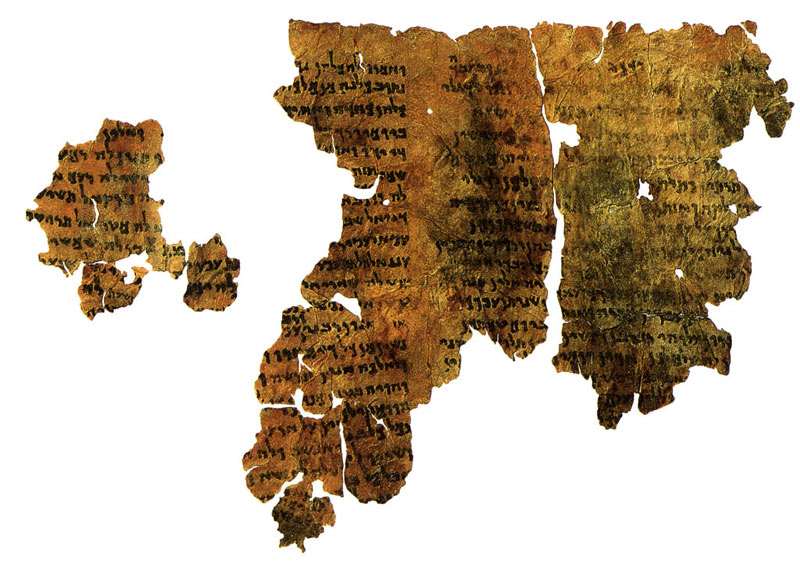
4Q201 is an Aramaic manuscript of Enoch from Qumran Cave 4. The surviving parchment fragments are direct manuscript evidence that Enochic writings circulated in antiquity.
Source: Leon Levy Dead Sea Scrolls Digital Library, Israel Antiquities Authority
View Evidence File →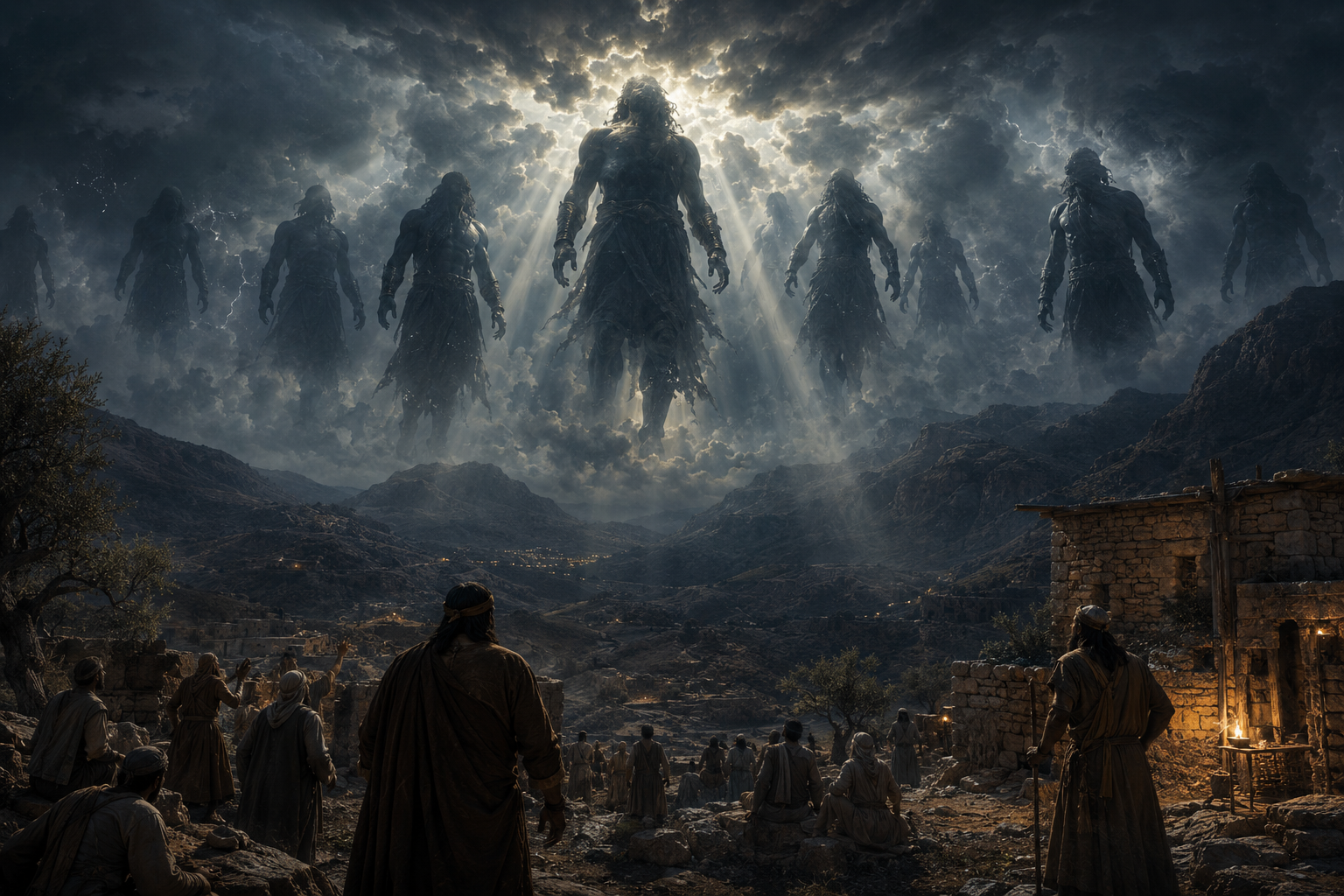
In the section commonly called the Book of the Watchers, heavenly beings descend to Earth, take human wives, and become associated with giant offspring and the transmission of prohibited knowledge. The illustration is an artist's interpretation, not evidence.
View Evidence File →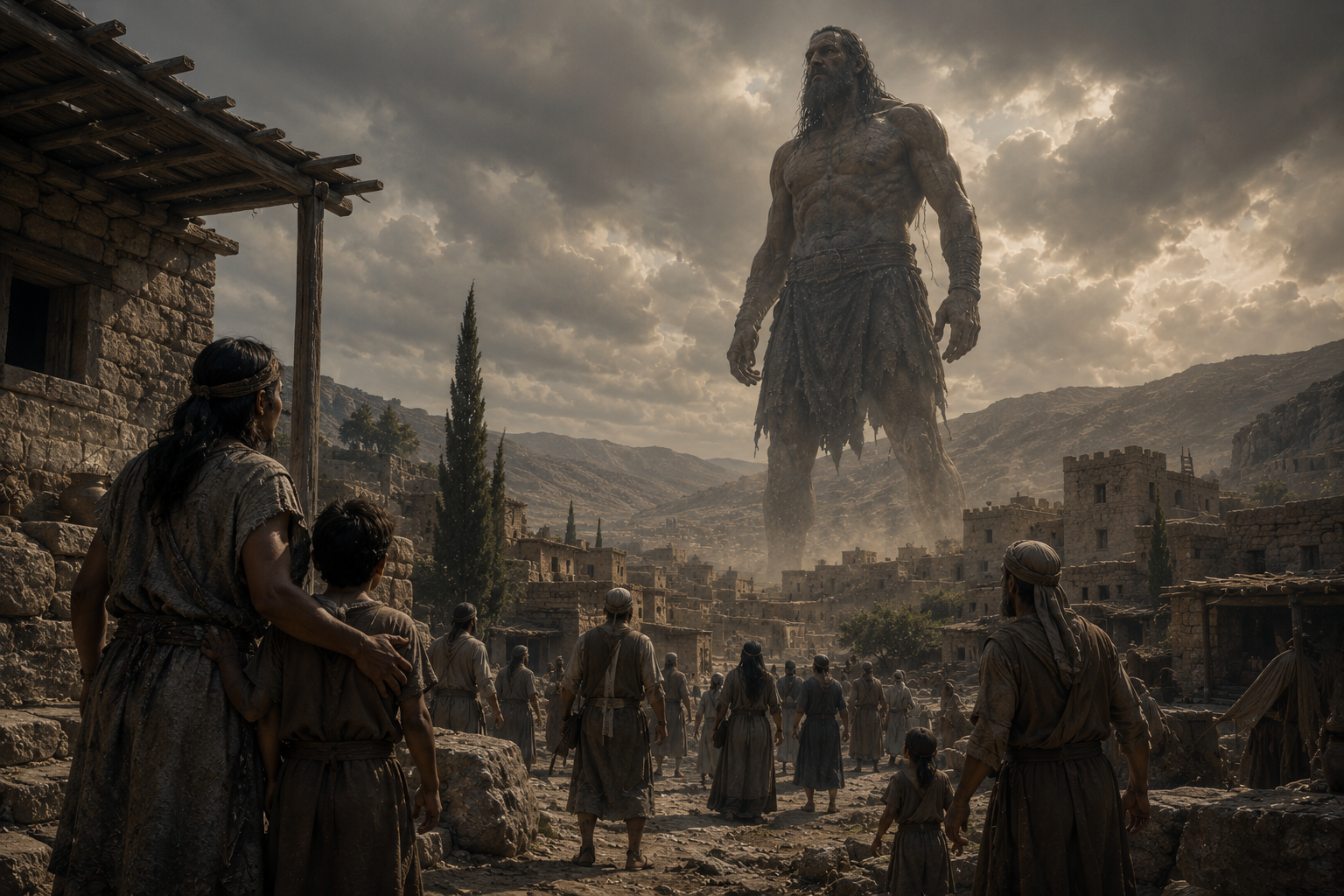
4Q531 is an Aramaic manuscript from Qumran Cave 4 conventionally identified as part of the Book of Giants. The manuscript is real. It does not establish that giants historically existed.
Source: Leon Levy Dead Sea Scrolls Digital Library, Israel Antiquities Authority
View Evidence File →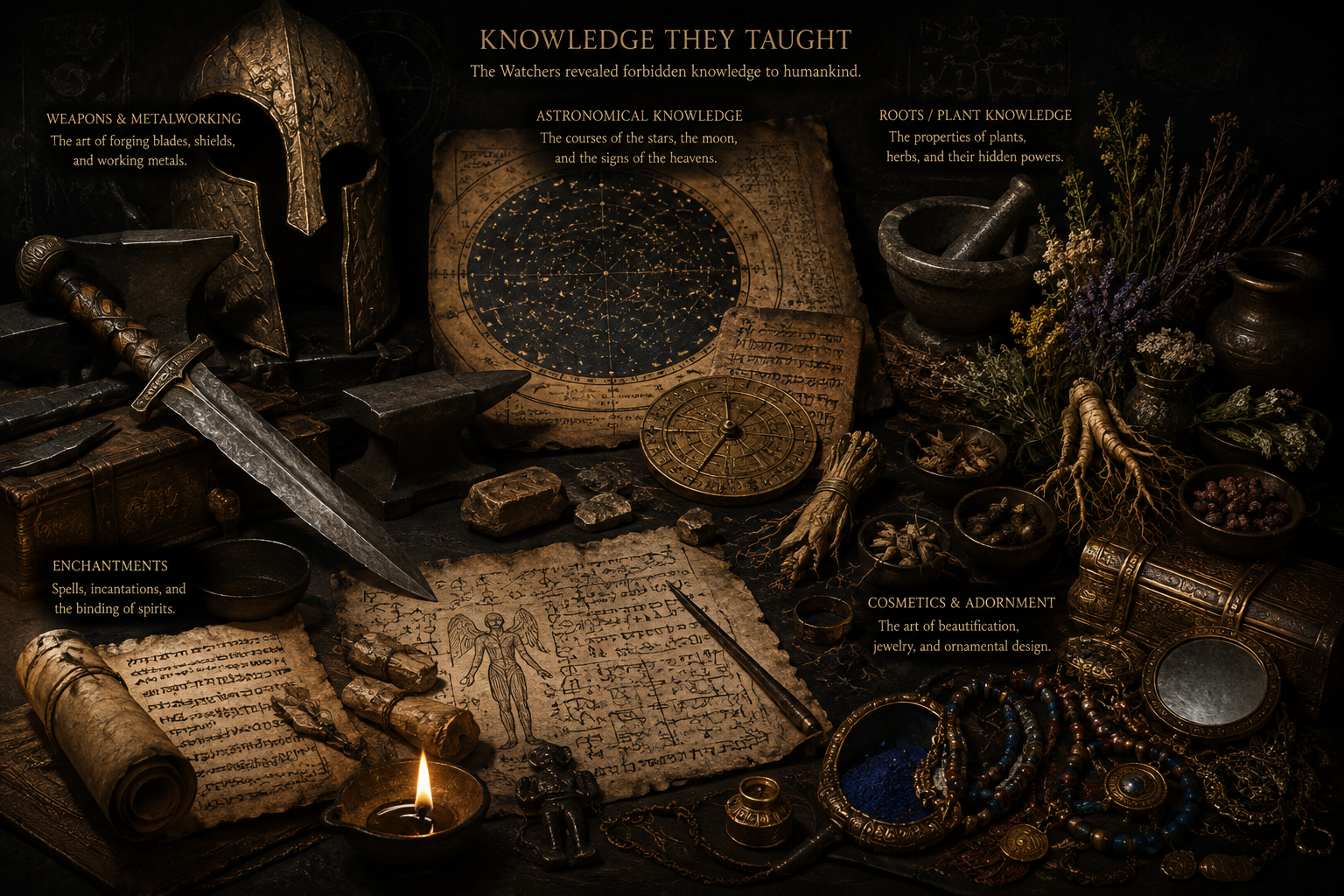
The Enochic narrative attributes prohibited forms of knowledge to the Watchers, including metalworking, celestial signs, enchantments, roots, and adornment.
View Evidence File →Biblical canons developed differently across Jewish and Christian communities over long periods of time. Saying that the Book of Enoch was simply removed from the Bible collapses a complicated history into a modern conspiracy claim.
View Evidence File →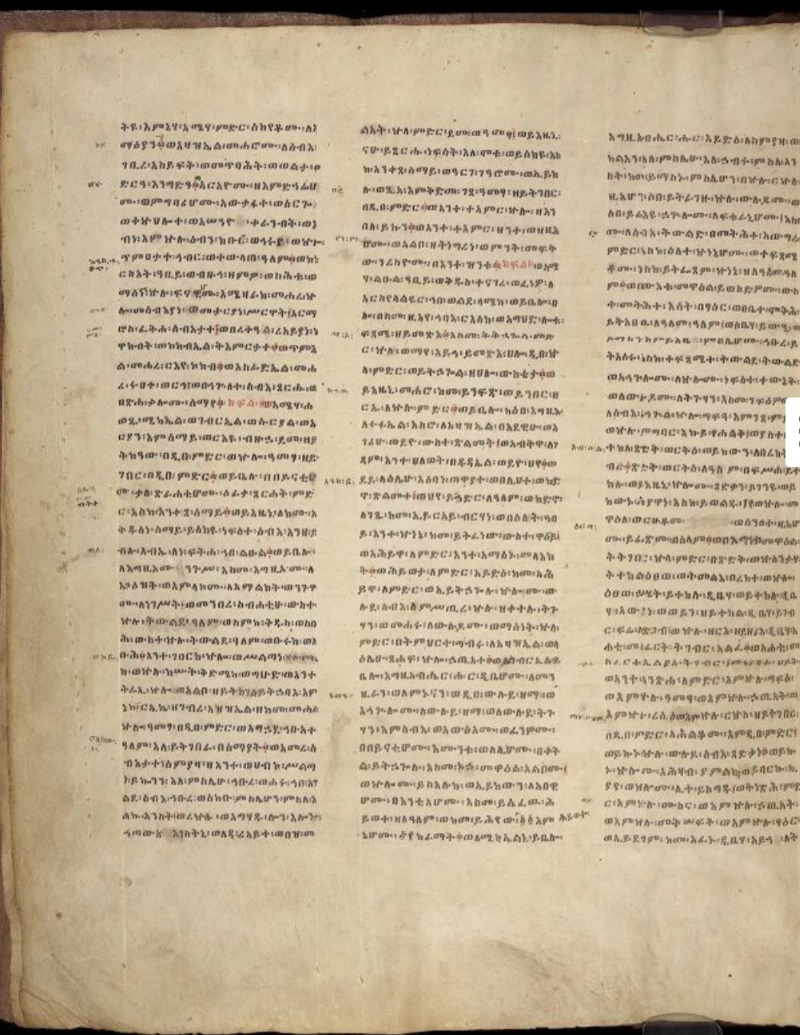
Aramaic at Qumran, Greek in the papyri tradition, and Ge'ez in Ethiopia. The complete work is preserved through the Ethiopic textual tradition.
Source: The British Library, Or. 485, folio 102r
View Evidence File →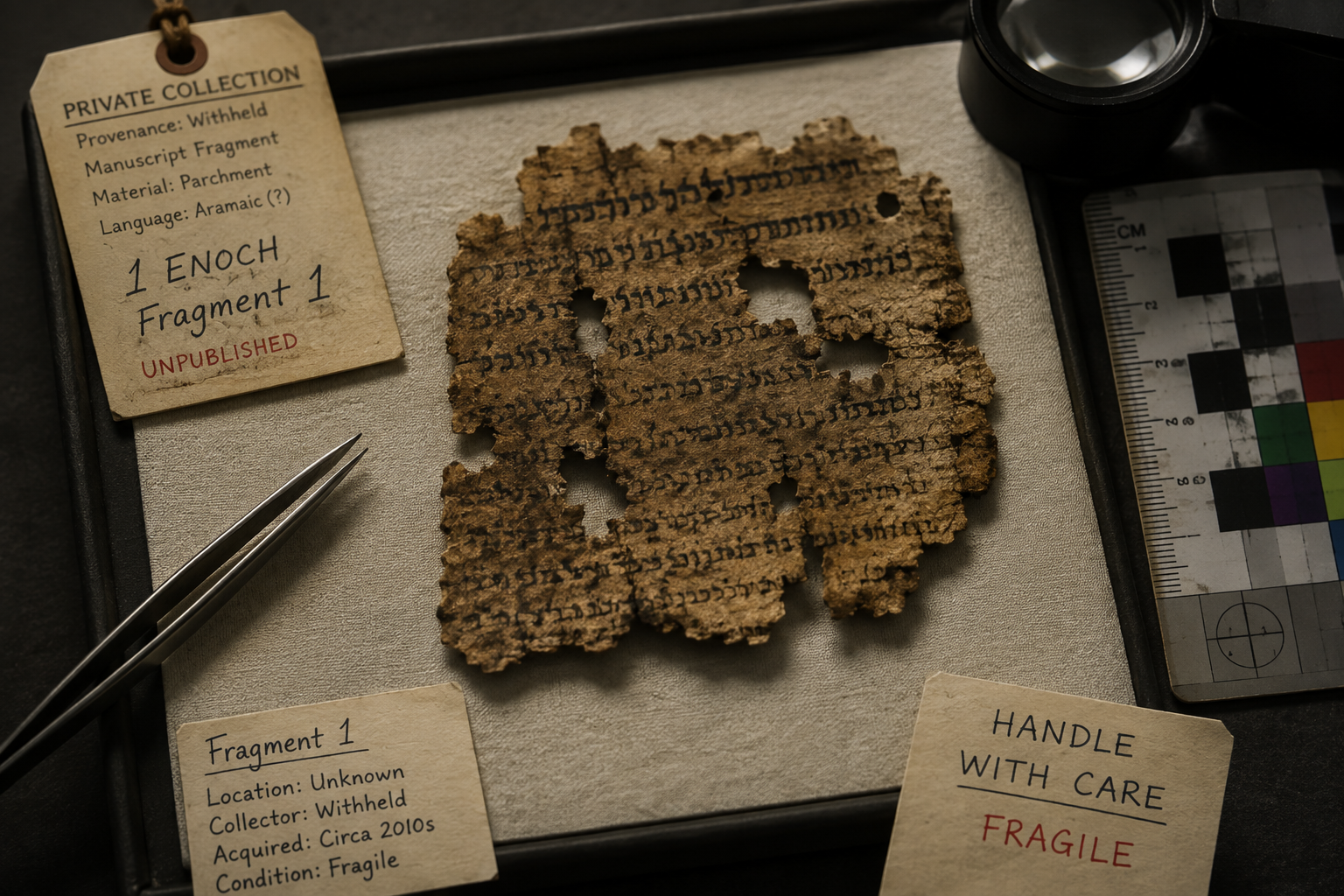
A visual reconstruction of the fictional unpublished fragment described in Chapter One. The fragment, its provenance, and Daniel's investigation are elements of the novel.
View Evidence File →The Investigation Continues
Back ENOCH on Kickstarter to enter the private Early Investigator Archive, read every available draft chapter, receive new chapters as they are released, and listen to prototype audio for Chapters 1 to 7.